Orchestration that ships real outcomes, not demos.
Solo, I designed and shipped a multi-tenant SaaS with live Stripe payments, lead pipelines that scale, and adversarial audit systems that fixed real production bugs.
Every project below has something you can click, see, or run. Proof, not adjectives.
Available for contract & white-labelLimerick, IE · Remote EU / UK / CA / US
Independent restaurants lose 14–30% of revenue to delivery marketplaces and never own their customer.
Built
A full platform on Supabase (Postgres, Row-Level Security, Edge Functions): a customer ordering app, an owner dashboard, and an admin console, with Stripe Connect handling real payments, platform commission and webhook reconciliation. Live in production with a real Limerick food business.
What I own
The payment idempotency layer. A re-delivered Stripe webhook can't double-credit: an atomic claim on the event id (a unique constraint, not a lock) serialises concurrent deliveries. I also closed a lost-update race in coupon redemption by claiming the order before mutating the shared promo counter, the same pattern I use for loyalty credits.
Proof
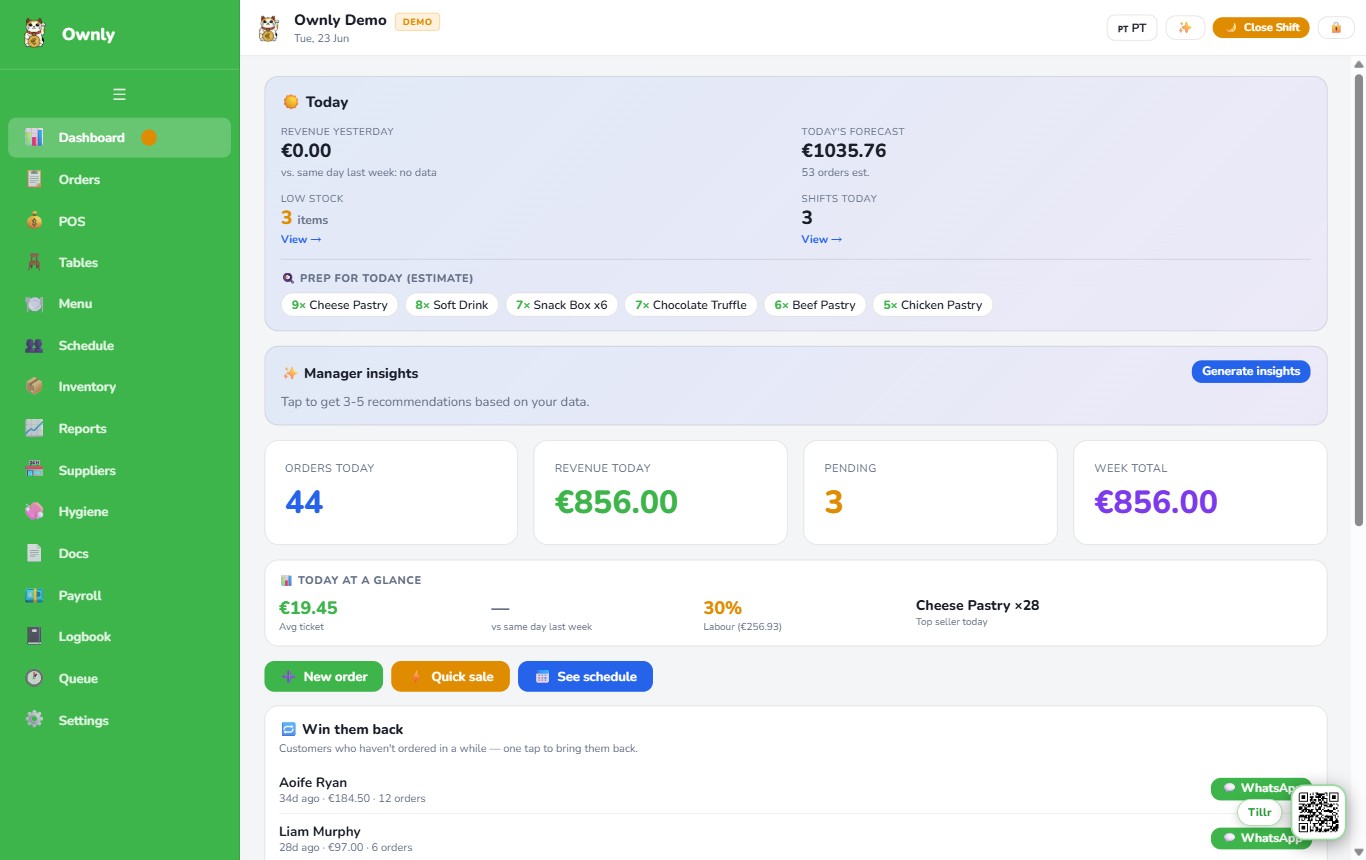
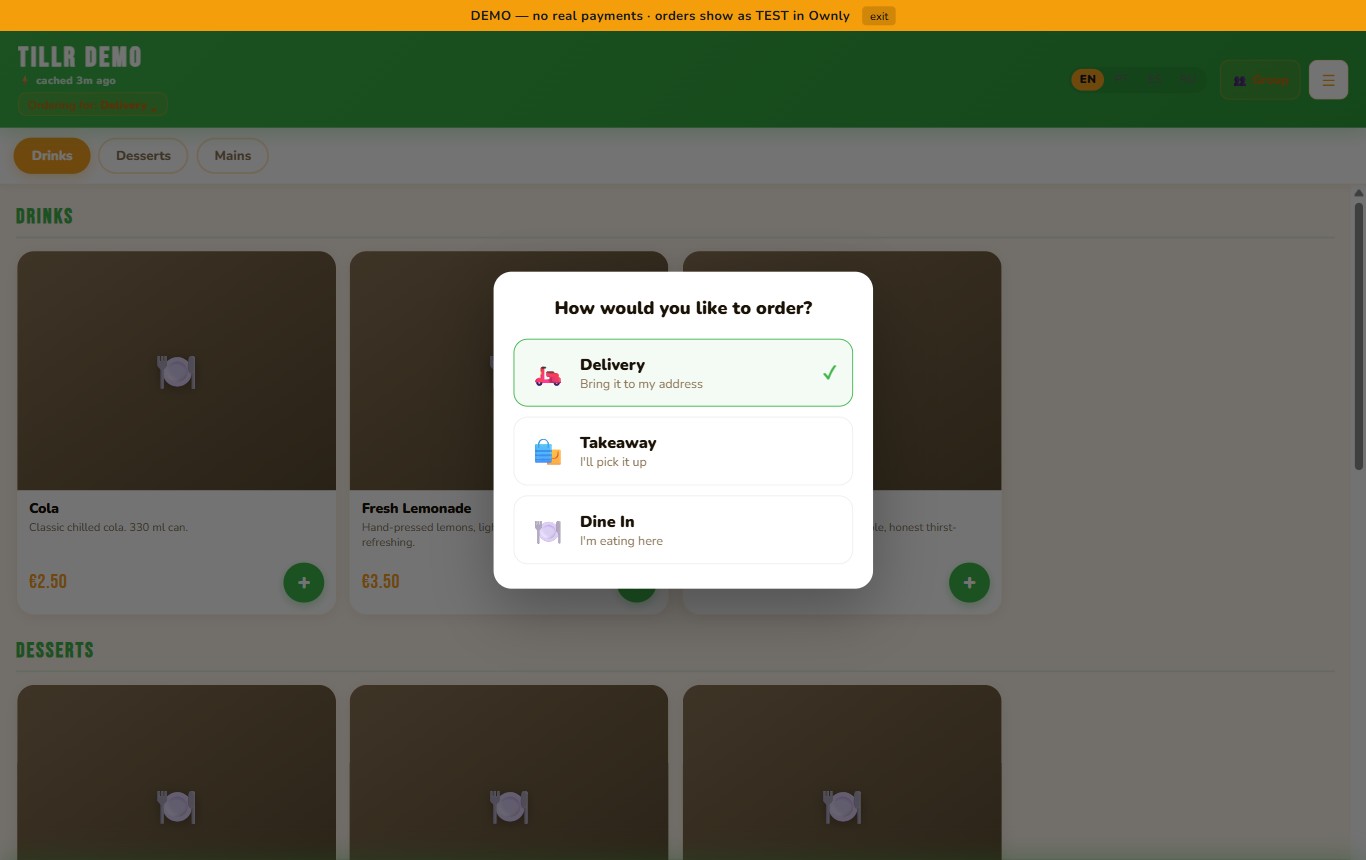
Two live apps you can open and tap through right now.
lucky-cat.pages.dev/demo/ownly
lucky-cat.pages.dev/demo/tillr
Live interactive demo · the demo store uses sample data that resets, so live figures differ from the snapshot.
Multi-agent code review · self-audit of the Lucky Cat codebase
Problem
A single AI pass over a codebase produces plausible-but-wrong findings and misses the real bugs in the tail.
Built
An orchestration that finds, then verifies: independent skeptics try to refute each finding, results are deduplicated against everything seen, and the loop runs until rounds come back dry. A finding survives only if refutation fails.
What I own
The method, and its cost. Fan-out is a one-time discovery cost, not a permanent policy: I right-size it by surface, then shrink to a small specialist set plus a deterministic pre-filter. The verifier, blind to the finder's reasoning, is the piece that pays for itself on every run.
Proof
One real audit run over the production codebase.
$audit run --adversarial --until-dry
finders 7 lenses · loop until 2 dry rounds
raw findings 68
deduped 59
verify independent skeptics · majority-refute kills
confirmed 48 ✓ fixed & shippedfalse positives 20 ✗ cut before human review
cost tracked per confirmed finding
# led with the method, never the agent count.
Scraping & enrichment · Python · keyless OSM data · 62 tests
Problem
Businesses waste hours hand-collecting and enriching prospect lists.
Built
A pipeline that geocodes a region, pulls businesses from open map data, enriches with public contact details, and exports a prioritised list. No API keys, no cost.
What I own
The scaling design. To go from one city to a whole country under strict rate limits it splits the area into geographic tiles, runs bounded concurrency with exponential backoff and jitter, caches to disk for idempotent re-runs, and resumes interrupted sweeps.
Proof
A real run, its test suite, and the actual output you can download below.
$python lead_finder.py "Limerick, Ireland"
geocode Nominatim · 52.66, -8.63
fetch Overpass · tiled · backoff + jitter
leads 198 found · 43 with direct contact
re-run cache hit · 0.44s (no network)
$python -m unittestRan 62 tests ... OK
Generating long-form content with AI risks drift and contradiction across sections.
Built
A multi-agent pipeline that produced a complete 21k-word book (PDF and valid EPUB), plus deterministic gates that scan for terminology drift and definitional contradictions across chapters and abort the build if they fire.
What I own
The honesty about what the gates prove. A deterministic check catches contradiction and drift, not philosophical fidelity; that needs a separate judge step. I document exactly what each gate guarantees and what it does not.
Proof
The finished book. Cover and full PDF below.
A complete book produced end to end: 21k words, 5 parts, glossary, valid EPUB, with deterministic validation gates wired into the build.